Title: “Educational Challenges in Nigeria: Analyzing Out-of-School Children by Geopolitical Zones”

Introduction:
Education is a fundamental right that empowers individuals and contributes to the overall development of a nation. In Nigeria, despite efforts to improve access to education, there are still significant numbers of out-of-school children. This data story aims to shed light on the distribution of out-of-school children across Nigeria’s six geopolitical zones and understand the underlying factors contributing to this issue.

  1. Geopolitical Zones Overview:
    Nigeria is divided into six geopolitical zones: North-West, North-East, North-Central, South-West, South-East, and South-South. Each zone has its unique sociocultural, economic, and geographical characteristics.
  2. Out-of-School Children Statistics:
    According to data from [EDUCELEB], as of [2019], Nigeria had [10,193,918] million out-of-school children. A breakdown by geopolitical zone reveals the following distribution:
  • North-West: [3,490,671]
  • North-East: [2,001,036]
  • North-Central: [1,329,111]
  • South-West: [1,451,740]
  • South-East: [713,176]
  • South-South: [1,208,182]
  1. Factors Contributing to Out-of-School Children:
    a. Poverty: The high prevalence of poverty in the northern regions, especially in the North-East and North-West, contributes to a significant number of children being out of school due to financial constraints. b. Insecurity: Ongoing conflicts in the North-East and North-West regions disrupt educational activities and displace families, leading to children missing out on schooling opportunities. c. Cultural Norms: In some regions, cultural norms and early marriages limit educational opportunities, particularly for girls. d. Infrastructure: Unequal distribution of educational infrastructure, with better facilities in the southern regions, affects access to quality education.
  2. Government Initiatives:
    The Nigerian government has launched initiatives to address the issue of out-of-school children, including the Universal Basic Education Act and the National School Feeding Program. These programs aim to improve enrollment rates and retention of children in schools.
  3. Conclusion:
    The problem of out-of-school children in Nigeria is a complex issue influenced by various socioeconomic and cultural factors. It disproportionately affects the northern regions, particularly the North-East and North-West. Addressing this challenge requires a multifaceted approach, including efforts to reduce poverty, improve security, and promote the value of education in all regions.

This data story highlights the importance of targeted interventions and policies to ensure that every child in Nigeria has access to quality education, regardless of their geographical location.

“Student union on school fees request”

The Students Union Government of Kaduna Polytechnic, led by Comr. Aliyu Muhammad Mangal, visited the Rector of Kadpoly to express their concerns about students facing difficulties in paying their school fees. We requested an additional one week extension for the benefit of those that couldn’t pay school.

Additionally, the Students Union highlighted the issue of many students being unable to collect their exams cards.

In response, the Rector of Kaduna Polytechnic, Dr. Suleiman Umar, made the following resolutions:
★- Exams will not be rescheduled. Noting that it will commence Tomorrow, Tuesday 3rd October, 2023. If extended, it will affect the calendar.

★- Students who are unable to collect their exams card will be allowed to write their exams on Tuesday and Wednesday, provided they present a verified and stamped school fees receipt.

These resolutions were made to help the students in taking the advantage and participate fully in their exams.

AMOUNT OF PEOPLE INFECTED WITH TYPHOID IN NIGERIA

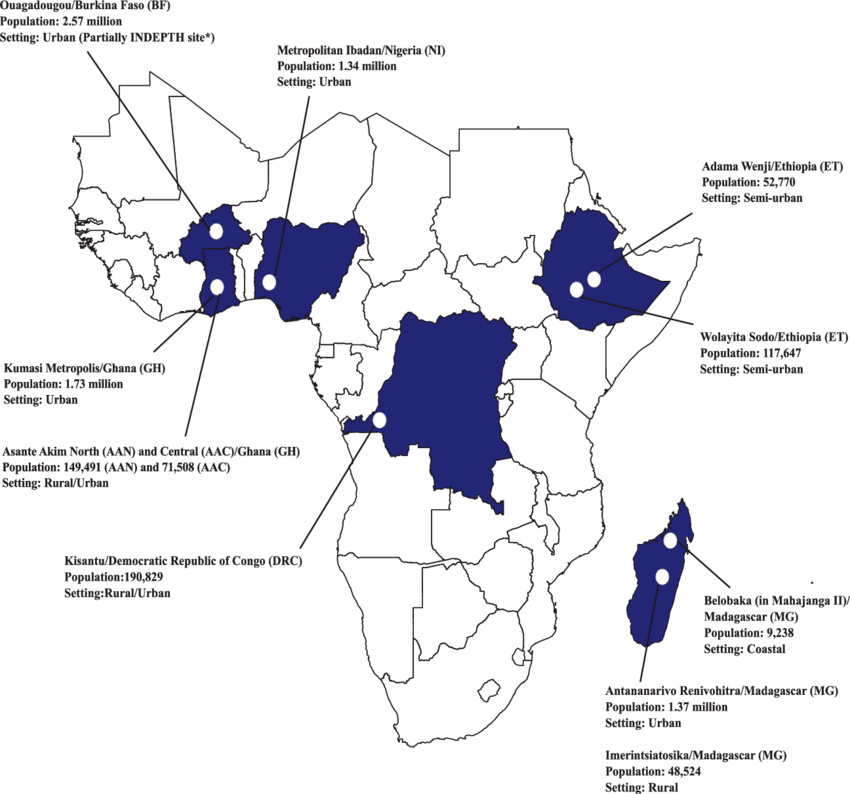
Locations of the Severe Typhoid Fever in Africa program sites. Population data sources: Burkina Faso: United Nations population division, Department of Economic and Social Affairs, 2014; Ouagadougou Health and Demographic Surveillance System routine data, 2015 (Niokoll/Polesgo nested in Ouagadougou); International Network for the Demographic Evaluation of Populations and Their Health. Democratic Republic of Congo: Kisantu Central Health Zone Office, 2017 (Nandu/Kavwaya nested in Kisantu). Ethiopia: 2016 Ethiopia Health Management Information System, Ministry of Health. Ghana: Agogo Presbyterian Hospital official catchment area (Asante Akim North); 2010 Population and Housing Census (Asante Akim Central and Kumasi Metropolis). Madagascar: Ministry of Health, Repartition de la population par Fokotany, 2018 (Imerintsiatosika); Madagascar Population Statistics from Institut National de la Statistique de Madagascar (National Institute of Statistics)/United Nations Population Fund, 2015 (Antananarivo); commune census, 2019 (Belobaka).

Nigeria: Annual Abstract of Statistics 2011, National Bureau of Statistics, Federal Republic of Nigeria. Abbreviation:

INDEPTH, International Network for the Demographic Evaluation of Populations and Their Health.

Source publication

The Severe Typhoid Fever in Africa Program: Study

… on the Typhoid Fever Surveillance in Africa Program

(TSAP) network [6], the SETA program utilized and expanded on previously established fever surveillance infrastructure in sub-Saharan Africa. Six countries were selected exhibiting high disease endemicity (Burkina Faso, Ghana, Madagascar), further need for in-country investigations on TF (Ethiopia), and value of extending to additional study sites to countries with large population numbers (Democratic Republic of Congo and Nigeria); study sites in these countries have been integrated into the SETA program to enable harmonized multicountry surveillance and data comparability (Figure 1). Each SETA site has two distinct study areas (Table 2): a medically served area where surveillance and subsequent studies (case follow-up, enrollment and follow-up of neighborhood controls [NCs] and household contacts [HCs], healthcare utilization survey, and cost of illness and long-term socioeconomic studies) were performed, and a medically underserved area where the frequency of mortality due to suspected severe TF was assessed through postmortem questionnaires…

Context 2

… on the Typhoid Fever Surveillance in Africa Program

(TSAP) network [6], the SETA program utilized and expanded on previously established fever surveillance infrastructure in sub-Saharan Africa. Six countries were selected exhibiting high disease endemicity (Burkina Faso, Ghana, Madagascar), further need for in-country investigations on TF (Ethiopia), and value of extending to additional study sites to countries with large population

While data are limited, case reports and case series suggest that the burden of TIP in sub-Saharan Africa is highly variable and may be substantial in certain settings [5,11, 12]. The Severe Typhoid in Africa Program (SETA), conducted in 6 countries, investigated bacterial etiologies of fever, including severe complications

[13]. Using the SETA data, our goal was to describe the epidemiology, clinical profiles, and associated risk factors for nontraumatic IPs in children and adults, and to categorize these cases based on their likelihood of being TIP…

… This study included participants enrolled in the

SETA program in 6 countries (Burkina Faso, Democratic Republic of Congo [DRC], Ethiopia, Ghana, Madagascar, and Nigeria); detailed methods of the study have been previously published [13]. Patients of all ages residing in the defined catchment areas within each of the participating countries meeting fever criteria (defined as having a temperature of ≥37.5°C axillary or ≥38.0°C tympanic measurement upon examination or a history of 3 consecutive days of self-reported fever within the preceding 7 days) were eligible for inclusion in the surveillance study and were evaluated for bacteremia by blood culture diagnostics…

… Blood agar was incubated at 5% carbon dioxide and other media were incubated in ambient conditions at 37° C for 18-24 hours. Further details on microbiological confirmation of S. Typhi have been published previously.

Characterization of Typhoid Intestinal Perforation Due to the co-occurrence of S. Typhimurium and S. Enteritidis in settings where iNTS disease occurs, standalone S. Typhimurium and S.

Enteritidis vaccines have never gained traction from a global health perspective. Meanwhile, typhoid fever is increasingly appreciated as a problem in Africa from recent pan-African surveillance studies, in particular the Typhoid Surveillance in Africa Program (TSAP) [65] and the Severe Typhoid in Africa (SETA) study [66], These 2 studies examined typhoid fever incidence in sites in Africa where typhoid fever has been reported to be a problem. Separately, the outbreak potential of typhoid fever makes a strong case for adding a licensed TCV to bivalent NTS vaccine combinations.

Salmonella Combination Vaccines: Moving Beyond

MATRICULATION CONCERT

What a day and what a moment

Let me use this media to say thank you to all the artists that performed at our matriculation festival we really appreciate the effort that the SUG president and the social director organized for the newly and continues students

DJ AB performing live at convocational square with the other artists like SOJA BOY , AUTA WAZIRI, and also our favorite DJ MOHART he is so good at his job because he mix different beat for us we danced very well
Design a site like this with WordPress.com
Get started